




Who is Olaf Scholz the German Chancellor candidate
Next week Germany goes the polls to vote in its new parliament, which means a new German Chancellor will be taking the helm. The current favourite is the Social Democratic Party leader Olaf Scholz. Who is he and what could Germany look like with him in charge?
Share this:

Who is Olaf Scholz?
Olaf Scholz is the Social Democratic Party (SPD) candidate for German chancellor. The 63-year-old was born in Osnabruck but grew up in Hamburg. He is the finance minister and deputy of current German Chancellor Angela Merkel, making him a key figure in the government’s approach to coronavirus.
Scholz was elected mayor of Hamburg in 2011 and remained in this role until Merkel drafted him back into her government as vice-chancellor and finance minister in 2018 as part of a coalition between the SPD and Merkel’s Christian Democratic Union (CDU).
Scholz has the nickname ‘Scholzomat’, combining his surname with ‘automat’ due to his robotic-like nature. He is famously uncharismatic, but this doesn’t seem to have prevented him from gaining in popularity in the run up to the chancellor elections.
Scholz first threw his hat in the leadership ring in 2019 but was defeated due to his more centrist leanings – his two competitors were more left wing. But not a year and half later he was made the chancellor candidate thanks to his involvement in the Covid-19 economic interventions and a softening of his communication.
Could Olaf Scholz be the next chancellor?
Olaf Scholz is considered the favourite to succeed current German Chancellor Angela Merkel in the election on September 26. But due to the way that the German election works, the voters don’t directly elect the candidate, they vote for the party and then the Bundestag (parliament) votes for the chancellor.
Scholz’s party, the SPD, has had a consistent poll lead throughout the election campaign despite lagging behind Merkel’s Christian Democratic Union (CDU) and the Greens well into June. According to The Economist’s election forecast, the SPD have a five in six chance of being the largest party in the Bundestag.
Realistically, the rise of the SPD has as much to do with the fall of their competitors as it does the party itself. The CDU has been criticised for their choice of candidate, selecting Armin Laschet instead of the more popular (but more right wing) rival Markus Soder. Meanwhile the Green party candidate Anna Baerbock has been accused of plagiarism.
While Olaf Scholz isn’t the most charismatic candidate, this lack of personality has actually worked in his favour, as it’s painted him as reliable and stable – which in the face of Covid-19 is what many German voters think the country needs. His outsider status is reminiscent of Merkel before she became chancellor.
What are Olaf Scholz’s policies?
Olaf Scholz’s policies are on the centrist to conservative wing of the SPD. Policies of Scholz’s that have gained international attention are his proposal for a global corporate minimum tax at the G20 as well as his proposals for a coronavirus aid programme and raising the minimum wage from €9.60 an hour to €12.
Until the pandemic struck, Scholz was known for economic caution, but he was instrumental in the €750 billion recovery plan and €130 billion stimulus package. He does want to return Germany to the ‘debt break’ by 2023, which would impost strict limits on government spending.
What do critiques think of Olaf Scholz?
Most of Scholz’s criticisms stem from his ministry’s handing of the Wirecard fraud scandal in 2020, in which the Federal Financial Supervisory Authority (BaFin) didn’t notice that €1.9 billion is missing. BaFin reports to the German finance ministry where Scholz is minister.
Not only this, but his department then prosecuted the Financial times journalists who were trying to expose the scandal.
As recently as this week Scholz has been in a parliamentary committee meeting to respond to the accusations of wrongdoing. Although he has stressed that he had no part in the matter and it doesn’t seem that the negative press has had any impact on his popularity.
Scholz’s Social Democrats remain first in the polls.
Want to trade the German election? Learn more with our series of articles
- A complete guide to trading the German election
- How the German election will impact stocks
- How the German election will impact the euro
- How the German election will impact the DAX index
- How the German election will impact the Eurostoxx 50
Alternatively, if you’re ready to trade you can get started in these four easy steps:
- Open an account, or practise trading in a demo account
- Search for the company you want to trade in our award-winning platform
- Choose your position and size, and your stop and limit levels
- Place the trade
Who is Olaf Scholz?
Olaf Scholz is the Social Democratic Party (SPD) candidate for German chancellor. The 63-year-old was born in Osnabruck but grew up in Hamburg. He is the finance minister and deputy of current German Chancellor Angela Merkel, making him a key figure in the government’s approach to coronavirus.
Scholz was elected mayor of Hamburg in 2011 and remained in this role until Merkel drafted him back into her government as vice-chancellor and finance minister in 2018 as part of a coalition between the SPD and Merkel’s Christian Democratic Union (CDU).
Scholz has the nickname ‘Scholzomat’, combining his surname with ‘automat’ due to his robotic-like nature. He is famously uncharismatic, but this doesn’t seem to have prevented him from gaining in popularity in the run up to the chancellor elections.
Scholz first threw his hat in the leadership ring in 2019 but was defeated due to his more centrist leanings – his two competitors were more left wing. But not a year and half later he was made the chancellor candidate thanks to his involvement in the Covid-19 economic interventions and a softening of his communication.
Could Olaf Scholz be the next chancellor?
Olaf Scholz is considered the favourite to succeed current German Chancellor Angela Merkel in the election on September 26. But due to the way that the German election works, the voters don’t directly elect the candidate, they vote for the party and then the Bundestag (parliament) votes for the chancellor.
Scholz’s party, the SPD, has had a consistent poll lead throughout the election campaign despite lagging behind Merkel’s Christian Democratic Union (CDU) and the Greens well into June. According to The Economist’s election forecast, the SPD have a five in six chance of being the largest party in the Bundestag.
Realistically, the rise of the SPD has as much to do with the fall of their competitors as it does the party itself. The CDU has been criticised for their choice of candidate, selecting Armin Laschet instead of the more popular (but more right wing) rival Markus Soder. Meanwhile the Green party candidate Anna Baerbock has been accused of plagiarism.
While Olaf Scholz isn’t the most charismatic candidate, this lack of personality has actually worked in his favour, as it’s painted him as reliable and stable – which in the face of Covid-19 is what many German voters think the country needs. His outsider status is reminiscent of Merkel before she became chancellor.
What are Olaf Scholz’s policies?
Olaf Scholz’s policies are on the centrist to conservative wing of the SPD. Policies of Scholz’s that have gained international attention are his proposal for a global corporate minimum tax at the G20 as well as his proposals for a coronavirus aid programme and raising the minimum wage from €9.60 an hour to €12.
Until the pandemic struck, Scholz was known for economic caution, but he was instrumental in the €750 billion recovery plan and €130 billion stimulus package. He does want to return Germany to the ‘debt break’ by 2023, which would impost strict limits on government spending.
What do critiques think of Olaf Scholz?
Most of Scholz’s criticisms stem from his ministry’s handing of the Wirecard fraud scandal in 2020, in which the Federal Financial Supervisory Authority (BaFin) didn’t notice that €1.9 billion is missing. BaFin reports to the German finance ministry where Scholz is minister.
Not only this, but his department then prosecuted the Financial times journalists who were trying to expose the scandal.
As recently as this week Scholz has been in a parliamentary committee meeting to respond to the accusations of wrongdoing. Although he has stressed that he had no part in the matter and it doesn’t seem that the negative press has had any impact on his popularity.
Scholz’s Social Democrats remain first in the polls.
Want to trade the German election? Learn more with our series of articles
- A complete guide to trading the German election
- How the German election will impact stocks
- How the German election will impact the euro
- How the German election will impact the DAX index
- How the German election will impact the Eurostoxx 50
Alternatively, if you’re ready to trade you can get started in these four easy steps:
- Open an account, or practise trading in a demo account
• Open an account in the UK
• Open an account in Australia
• Open an account in Singapore - Search for the company you want to trade in our award-winning platform
- Choose your position and size, and your stop and limit levels
- Place the trade
Related tags:



Open an account in minutes
Experience award-winning platforms with fast and secure execution.
Economic calendar
Web Trader platform
Our sophisticated web-based platform is packed with features.
Related articles
DAX, EUR/GBP Forecast: Two trades to watch
DAX rises despite Trump’s tariffs. EUR/GBP struggles to gain ground as BoE–ECB rate differentials weigh.

EUR/USD Forecast: Euro Faces Levels Not Seen Since April 2025
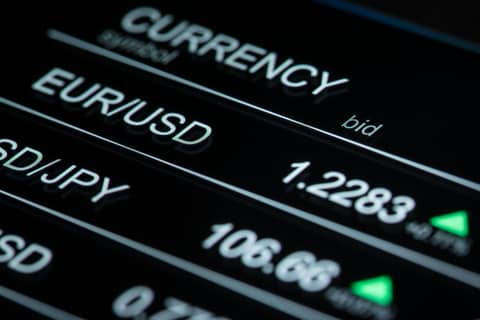
Trading conditions continue to be quite challenging for the euro in the short term. The European currency remains under considerable pressure against the U.S. dollar, a dynamic that can be clearly seen in the behavior of EUR/USD, which has started the week down nearly 0.7%.

silver-crash-2026-vs-2011-collapse
Silver has collapsed some 65% from its January peak, drawing uncomfortable comparisons with the 2011 crash. The parallels are striking, but a bigger bubble, a hawkish Federal Reserve and years of supply deficits make this episode different.

The information on this web site is not targeted at the general public of any particular country. It is not intended for distribution to residents in any country where such distribution or use would contravene any local law or regulatory requirement. The information and opinions in this report are for general information use only and are not intended as an offer or solicitation with respect to the purchase or sale of any currency or CFD contract. All opinions and information contained in this report are subject to change without notice. This report has been prepared without regard to the specific investment objectives, financial situation and needs of any particular recipient. Any references to historical price movements or levels is informational based on our analysis and we do not represent or warranty that any such movements or levels are likely to reoccur in the future. While the information contained herein was obtained from sources believed to be reliable, author does not guarantee its accuracy or completeness, nor does author assume any liability for any direct, indirect or consequential loss that may result from the reliance by any person upon any such information or opinions.
Futures, Options on Futures, Foreign Exchange and other leveraged products involves significant risk of loss and is not suitable for all investors. Losses can exceed your deposits. Increasing leverage increases risk. Spot Gold and Silver contracts are not subject to regulation under the U.S. Commodity Exchange Act. Contracts for Difference (CFDs) are not available for US residents. Before deciding to trade forex, commodity futures, or digital assets, you should carefully consider your financial objectives, level of experience and risk appetite. Any opinions, news, research, analyses, prices or other information contained herein is intended as general information about the subject matter covered and is provided with the understanding that we do not provide any investment, legal, or tax advice. You should consult with appropriate counsel or other advisors on all investment, legal, or tax matters. References to FOREX.com or GAIN Capital refer to StoneX Group Inc. and its subsidiaries. Please read Characteristics and Risks of Standardized Options.