

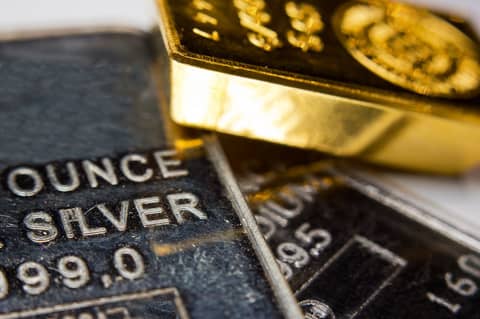
Trading 101
History of commodity markets
Learn how commodity markets set prices via spot and futures across energy, metals and agriculture, and how to trade commodities. Read more
The history of commodity markets is the history of how people trade essential raw materials, from precious metals and crude oil to agricultural products, to manage uncertainty and set transparent prices. Today, the commodity market is global, technology-driven, and built around mechanisms that let participants buy or sell a commodity now or at a future date.
A commodity market is a place where commodities are priced and exchanged, either in physical channels or through commodity derivatives. In modern finance, commodity prices often reflect supply and demand and macro forces, and some investors use commodity exposure to hedge against inflation.
Mini glossary
- Commodity market/commodities markets/commodities markets: The markets where commodities are traded and priced, the commodity market for of commodities like energy, metals, and agriculture.
- Commodity: A commodity is a standardized, interchangeable product; commodities can be traded globally as raw materials.
- Commodity exchange/commodity exchanges: Organized venues for trading in commodity derivatives, including futures and options.
- Futures contract/futures contracts/futures contract: An agreement between two parties to buy or sell a commodity at a future date (a future date) under standard terms, including the expiration date.
- Spot prices: Prices for immediate settlement; the spot side of spot vs futures markets (explained below).
- Over the counter: Trading that occurs over the counter (OTC), outside central order books, often with clearing arrangements.
- Commodity futures trading commission: A U.S. regulator. The Commodity Futures Trading Commission regulates derivatives markets, including futures contracts and options, in the United States.
What the commodity market is
The commodity market is designed to support price discovery and risk transfer. Markets exist so commercial users and financial participants can trade in commodities and manage the risk of changing input costs and revenues.
In the Americas, market participation spans energy, metals, and agriculture: including energy products like natural gas and crude oil, and metals such as precious metals like such as gold, in addition to and agriculture products like grains and softs, yes, even niche contracts such as orange juice can be part of the broader ecosystem of commodities markets.
Types of commodities
There are many types of commodities, but most readers group types of commodities into:
Energy
Energy is central to modern economies. Crude oil and natural gas are core benchmarks, and their commodity prices can shift fast when supply and demand changes due to geopolitics, weather, or production decisions. In commodity markets, energy is also a key input for industrial and household consumption.
Metals
Metals include industrial metals and precious metals. Such as precious metals (for example, such as gold) are often discussed in particular during uncertainty. Metals markets matter not only for investment narratives, but also because metals are critical raw materials for manufacturing and infrastructure.
Agriculture
Agriculture includes agricultural products such as grains and soft commodities. Some contracts are widely known, while others (like orange juice) are famous examples of how specialized commodity exchanges can become. Agriculture prices can swing because supply and demand is sensitive to seasons and weather.
Key commodities shaping global markets
Rather than focusing on short‑term performance or rankings, the commodities below are widely traded because of their structural importance to the global economy.
- Crude oil
One of the most influential commodities globally, crude oil underpins transportation, manufacturing, and energy production. Changes in oil supply or demand often have broad economic and inflationary effects. - Natural gas
Natural gas plays a key role in electricity generation, industrial processes, and heating. It is heavily influenced by weather patterns, storage levels, and regional supply constraints. - Gold
Gold is a widely recognized precious metal used in jewelry, technology, and investment. It is often viewed as a store of value during periods of economic uncertainty. - Copper
Copper is a critical industrial metal used in construction, electronics, and renewable energy infrastructure, making it closely tied to economic growth and electrification trends. - Aluminum
Lightweight and versatile, aluminum is widely used in transportation, packaging, and construction. Demand tends to reflect manufacturing activity and infrastructure spending. - Wheat
Wheat is a staple agricultural commodity central to global food systems. Prices are influenced by weather conditions, production levels, and international trade flows. - Corn
Corn is used for food products, animal feed, and biofuels. Its price dynamics are shaped by harvest cycles, energy markets, and global demand. - Soft commodities (such as coffee and sugar)
Soft commodities are sensitive to climate conditions and regional production factors, making them an important part of global agricultural trade.
Global commodity prices over time
The chart below shows the Global Price Index of All Commodities, compiled by the International Monetary Fund and published via the Federal Reserve Bank of St. Louis. The index tracks broad movements in global commodity prices by combining benchmark prices across energy, metals, and agricultural commodities into a single composite measure.
The index is expressed as an index value where 2016 = 100. This means values above 100 indicate that average global commodity prices are higher than in 2016, while values below 100 indicate lower average prices compared with that base year.
Reading the chart from left to right, the line illustrates how commodity prices have moved across different economic phases. The sharp rise into 2022 reflects a period of strong price pressure across commodities, while the decline through 2023 shows a broad easing as supply conditions adjusted and demand growth slowed. More recent fluctuations highlight how commodity prices tend to respond to changing global conditions rather than move in a straight line.
Importantly, this is a broad market indicator, not a measure of any single commodity. Individual markets, such as crude oil, natural gas, or precious metals, can behave very differently at the same time. The value of the chart lies in showing overall trends in commodity markets, helping to illustrate how prices across raw materials tend to rise and fall in response to factors such as supply disruptions, economic growth, and inflationary pressures.
The index is backward‑looking and based on observed prices, it is best used to understand historical patterns and cycles in commodity markets, rather than to predict future price movements.
How to trade commodities
Commodity trading typically focuses on speculating on price movements rather than buying or selling physical goods. While specific tools and platforms vary, the process generally follows a clear sequence.
Step 1: Choose a commodity market
The first step is deciding which commodity market to trade. Common choices include energy commodities such as crude oil or natural gas, precious metals like gold, or agricultural products such as wheat or corn. Each market behaves differently based on supply and demand, seasonality, and global economic factors.
Step 2: Decide how to gain exposure
Most traders access commodities through financial instruments rather than physical markets. This can include futures contracts, options, or other derivative products that track the price of a commodity without requiring delivery.
Step 3: Analyze the market
Before entering a trade, traders typically analyze factors that influence commodity prices. These can include production levels, inventory data, weather conditions, geopolitical events, and broader economic indicators. Some traders also use price charts to assess trends and volatility.
Step 4: Choose whether to buy or sell
Commodity trading allows participants to take positions based on expectations of rising or falling prices. If prices are expected to increase, a trader may choose to buy. If prices are expected to fall, a trader may choose to sell.
Step 5: Consider risk management
Commodity markets can be volatile, so managing risk is an essential part of the process. This may involve deciding position size, setting limits on potential losses, and understanding how leverage and contract expiration dates can affect a trade.
Step 6: Monitor the position
Once a trade is open, market conditions can change quickly. Traders often monitor economic data, news events, and price movements to assess whether their original view still holds.
Step 7: Close the trade
Trades are typically closed before contracts expire, either to lock in profits or limit losses. Because most commodity trades are settled financially, closing a position does not involve taking delivery of the underlying commodity.
How to trade commodities online
You can trade dozens of via CFDs on FOREX.com, from oil and natural gas to grains and livestock. Follow these steps to start trading commodities today:
- Open an account or log in if already a customer
- Search for the metal or commodity you’d like to trade
- Choose your position and size, and your stop and limit levels
- Place the trade
Alternatively, you can practice trading with a FOREX.com demo account or learn more about trading commodities.
Together, these steps show how commodity trading fits into modern financial markets, where price exposure and risk management are central considerations.
How commodity markets work: physical, exchange-traded, and over the counter
To understand of commodity markets, it helps to split activity into:
- Physical trade
Producers and consumers exchange the physical commodity through supply chains. This side is fundamental because real-world flows ultimately influence the price of the underlying. - Exchange-traded derivatives (futures and options)
Many participants use futures contracts and options to manage risk. A futures contract is a standard agreement between two parties to buy or sell a commodity on a future date, with contract terms including the expiration date. This is the backbone of futures trading. - Over the counter (OTC) derivatives
Some exposure is arranged over the counter, especially when participants want customized terms. OTC markets may still rely on clearing and benchmark pricing.
Spot trading is different. Spot prices reflect immediate settlement and are not the same as futures prices.
Spot prices vs futures prices
When comparing spot prices and futures, the key difference is timing and standardization.
- Spot: settlement now at current spot prices.
- Futures: pricing for delivery/settlement at a future date (a future date), under a contract that includes the expiration date.
Futures prices can embed expectations about storage, financing, and anticipated market conditions. Spot and futures prices can move together when shocks hit supply and demand.
Exchanges and regulation: where trading happens
In modern markets, large volumes flow through regulated exchanges and clearing systems.
- Commodity Futures Trading Commission: The commodity futures trading commission regulates derivatives markets (including futures and options) in the United States.
- CME Group: A major venue for futures and options across multiple asset classes, including commodities.
- Intercontinental Exchange: A global operator known for energy and commodity benchmarks and exchange infrastructure.
- London Metal Exchange: A key metals marketplace; LME options provide the right (not obligation) to buy or sell at a set price on a set date in the future (a future date) and reference an underlying future.
These are examples of commodity exchanges where participants can trade in commodities-related instruments and manage the risk of adverse price moves.
Why commodity prices move: supply and demand, macro, and cross-asset links
Commodity prices are primarily driven by supply and demand, but not only by physical fundamentals.
- Macro conditions can change the cost of holding commodities and influence investor positioning.
- In risk-off periods, some investors look to precious metals such as gold.
- In rate-sensitive environments, correlations can matter in the commodities complex: moves in the U.S. dollar, treasury bonds, and growth expectations can all influence pricing and trading volumes.
This is one reason investing in commodities is often framed as diversification: some investors use commodities exposure to hedge against inflation, while others trade shorter-term moves via commodity derivatives.
A short history of commodity markets
The history of commodity markets began with physical exchange of raw materials and expanded as merchants and producers sought standardization and forward commitments. Over time, futures evolved to agree pricing at a future date, and as participation broadened, more contracts developed across including energy, and metals, and agriculture.
Modern electronic access increased participation and trading volumes, linking markets in different regions and helping create the global network of commodities markets we recognize today.
In modern finance, the history of commodity markets explains why the commodity market is structured around standard contracts and risk transfer. Whether a participant wants to buy or sell a commodity now, lock in a price on a future date via a futures contract, or use futures and options to manage uncertainty, commodity markets exist to translate real-world supply and demand into transparent prices.
That same structure also explains why commodities can behave differently from equities and treasury bonds, why investors sometimes use commodities to hedge against inflation, and why the leading commodity exchanges in the United States and the Americas remain central to global price discovery.
Share this:
Latest market news



It’s easy to get started
Apply online in minutes with our simple and secure application form.
Go to our Trading Academy
Choose one of our four market-leading educational courses.
Economic calendar
FAQs
Related guides

Day trading stocks for beginners
Trading 101
|
5 minutes read
Day trading stocks has become popular thanks to the rise of social media users claiming they can ‘get rich quick’. But, in reality, day trading requires time, patience, and knowledge. So, let’s take a look at what day trading is and how to choose stocks to day trade.
Hang Seng Index trading guide
Trading 101
|
9 minutes read
The Hang Seng Index (HSI) is Hong Kong’s flagship benchmark often quoted as the HK50. Learn what drives HSI’s price, trading hours in Canada (ET), key constituents, and how traders use CFDs, futures, options, and ETFs. Read more
History of commodity markets
Trading 101
|
10 minutes read
Learn how commodity markets set prices via spot and futures across energy, metals and agriculture, and how to trade commodities. Read more
The information on this website is not targeted at the general public of any particular country. It is not intended for distribution to residents in any country where such distribution or use would contravene any local law or regulatory requirement. The information and opinions in this report are for general information use only and are not intended as an offer or solicitation with respect to the purchase or sale of any currency or CFD contract. All opinions and information contained in this report are subject to change without notice. This report has been prepared without regard to the specific investment objectives, financial situation and needs of any particular recipient. Any references to historical price movements or levels is informational based on our analysis and we do not represent or warranty that any such movements or levels are likely to reoccur in the future. While the information contained herein was obtained from sources believed to be reliable, author does not guarantee its accuracy or completeness, nor does author assume any liability for any direct, indirect or consequential loss that may result from the reliance by any person upon any such information or opinions.
Futures, Options on Futures, Foreign Exchange and other leveraged products involves significant risk of loss and is not suitable for all investors. Losses can exceed your deposits. Increasing leverage increases risk. Spot Gold and Silver contracts are not subject to regulation under the U.S. Commodity Exchange Act. Contracts for Difference (CFDs) are not available for US residents. Before deciding to trade forex, commodity futures, or digital assets, you should carefully consider your financial objectives, level of experience and risk appetite. Any opinions, news, research, analyses, prices or other information contained herein is intended as general information about the subject matter covered and is provided with the understanding that we do not provide any investment, legal, or tax advice. You should consult with appropriate counsel or other advisors on all investment, legal, or tax matters. References to FOREX.com or GAIN Capital refer to StoneX Group Inc. and its subsidiaries. Please read Characteristics and Risks of Standardized Options.